The Developmental Pyramid
Understand how developmental skills build upon one another and why higher-level learning becomes difficult when foundational systems need support.
Real hope. Real help.
Foundations of Hope: Overcoming Developmental Delays helps you look beneath the symptoms and understand the developmental foundations that support learning, behavior, attention, emotional regulation, movement, and academic success.
You do not need to know everything today. You simply need a better place to begin.
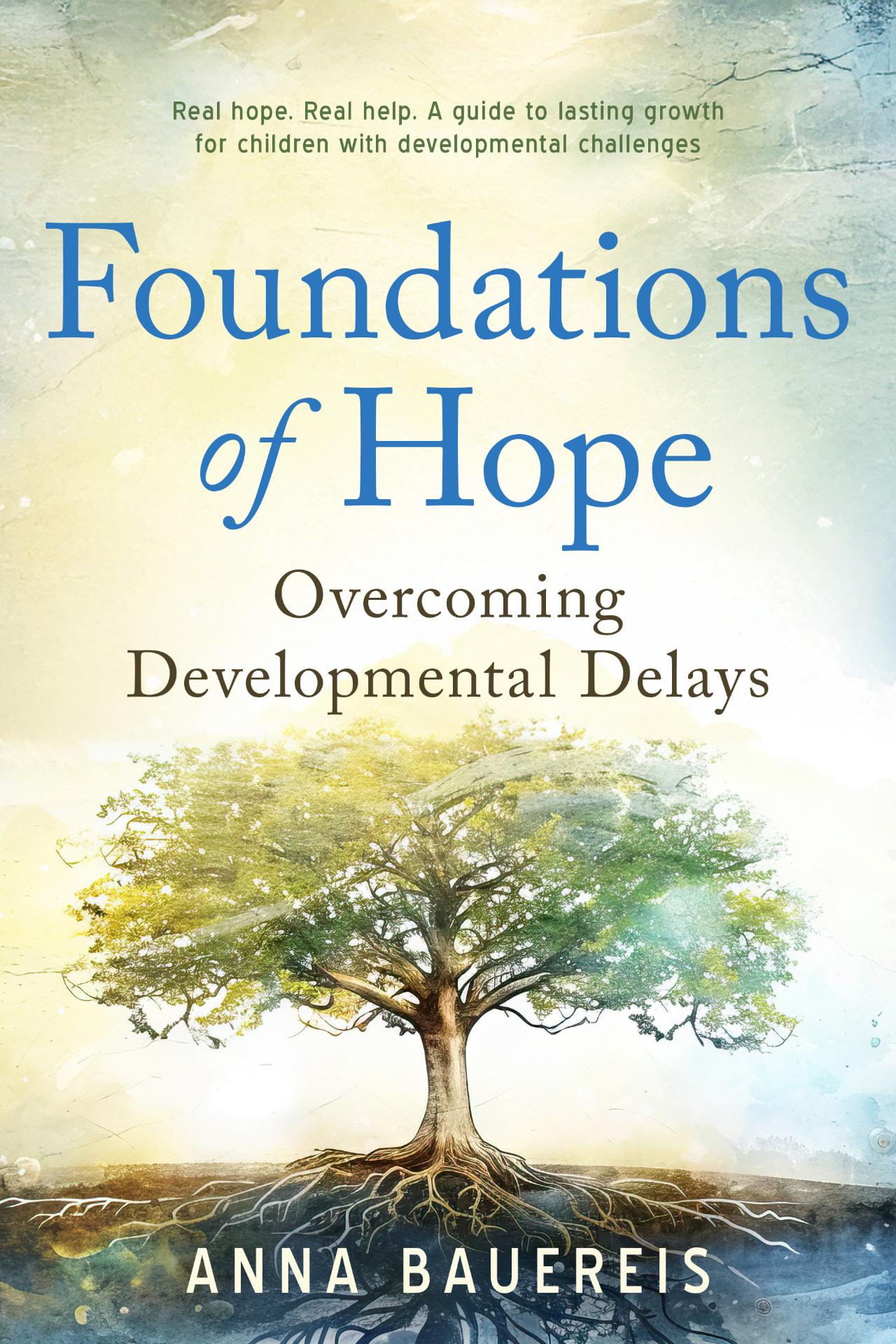
Children rarely wake up and decide to struggle.
The child who cannot sit still may be working much harder than you realize to regulate their body. The child who melts down during schoolwork may not be refusing to learn. The child who avoids reading may see the words perfectly but struggle to process what they see. The child who forgets instructions may not be careless.
When we only address the behavior we can see, we may miss the developmental foundation underneath it. That is where Foundations of Hope begins.
You have ever wondered:
You may have a child identified with ADHD, dyslexia, sensory processing challenges, anxiety, autism, or developmental delays. Or perhaps you have no diagnosis at all — you simply know your child is struggling. You do not need a label to begin paying attention to what your child's development may be telling you.
Instead of asking only:
“How do I stop this behavior?”
You begin asking:
“What is this behavior telling me?”
Instead of asking only:
“Why won't my child do the work?”
You can begin asking:
“What might be making this task difficult?”
Instead of focusing only on the academic problem, you begin looking at the foundations supporting the academic skill. That shift can change everything.
Imagine building a house. You would never begin with the roof — you would start with the foundation. Child development works much the same way. Reading, writing, math, organization, attention, self-control, and problem-solving all depend on earlier developmental systems working together.
Before asking, “Why can't my child do this?” it may help to ask, “What foundation might still need support?”
Understand how developmental skills build upon one another and why higher-level learning becomes difficult when foundational systems need support.
What they are, why they matter early, and how retained reflex patterns may affect movement, attention, posture, coordination, and learning.
Why ordinary sounds, textures, movement, clothing, crowds, or classroom demands can sometimes feel overwhelming.
Movement is not just what happens between lessons. It shapes brain development, regulation, attention, and readiness to learn.
Why a dysregulated child may have difficulty accessing the very skills you are asking them to use.
Planning, organizing, remembering instructions, managing time, shifting attention, controlling impulses, finishing tasks.
A child can have excellent eyesight or normal hearing and still struggle with how the brain processes what it takes in.
Why the nervous system needs rest, and how chronic stress affects learning, behavior, attention, and emotion.
The relationship between nutrition, hydration, digestion, energy, mood, and brain function.
Small repeated actions, becoming a better observer, and gaining confidence to ask better questions of professionals.
Sometimes what looks like defiance is overwhelm.
Sometimes what looks like laziness is fatigue.
Sometimes what looks like inattention is sensory overload.
Sometimes what looks like avoidance is a task that is neurologically much harder than it appears.
This does not mean behavior should be ignored. It means behavior deserves curiosity. When we become curious instead of simply corrective, we often discover information that helps us make better decisions.
Hope is not pretending everything is fine. Hope is believing that progress is possible while being willing to look carefully at what your child needs today.
The goal is not another list of things you are supposed to be doing — you probably have enough of those. The goal is to help you understand your child more clearly so you can decide what deserves your attention, and what may not.
You can begin with one observation. One routine. One area of support. One next step. Small changes, repeated consistently, can create meaningful differences over time.
You do not have to homeschool to benefit. These principles help parents whose children attend public school, private school, charter school, classical programs, microschools, hybrid schools, and homeschool programs.
Homeschool parents may find the book especially useful, because home education allows families to change the pace, add movement, shorten lessons, adjust expectations, observe patterns, build in regulation breaks, and teach a skill differently.
About the author
Anna Bauereis is a Board Certified Cognitive Specialist, homeschool consultant, educator, author, and former Brain Balance center owner who has spent more than a decade helping families navigate learning, developmental, behavioral, sensory, and educational challenges.
Through her work with thousands of families, Anna repeatedly saw the same pattern: parents were given labels for what their children were experiencing but were still left asking what they could actually do.
Her work focuses on helping parents understand the developmental foundations underneath learning and behavior, translating complex concepts into practical strategies families can use in everyday life.
“Calm, conversational, and practical.”
Makes complicated developmental concepts easier to understand without overwhelming parents.
“It explains the issue, what it may mean, and what parents can actually do.”
Rather than stopping with information, the book helps families think about everyday application.
“A bridge between research and real family life.”
Developmental and neuroscience concepts in language parents can understand and use.
A parent-friendly guide to the developmental foundations underneath learning, behavior, attention, sensory processing, emotional regulation, and academic struggles.
Print Book — $24.99
Order the book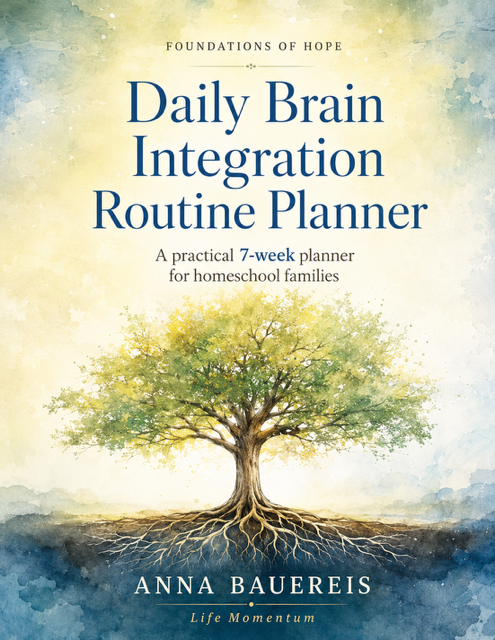
Observation tools, family planning pages, goal-setting frameworks, regulation trackers, nutrition and hydration logs, movement planning, reflex tracking, progress tracking, and advocacy notes.
Digital — $10.00
Printed — $14.99 + shipping
You do not have to leave this page and redesign your entire life. Start by noticing.
Observation gives you information. Information helps you make better decisions. And better decisions can create a different path forward.
No. It is written for parents of children struggling with learning, behavior, attention, sensory processing, emotional regulation, coordination, executive function, or developmental skills. A formal diagnosis is not required.
No. Families dealing with ADHD, autism, dyslexia, sensory challenges, anxiety, developmental delays, or executive-function difficulties may find it helpful, but the book is not limited to any diagnosis.
No. The developmental principles apply to children in homeschool, public school, private school, charter school, and other learning environments.
The concepts help parents understand development across childhood. Some sections focus on foundations that begin very early but continue affecting older children when they need more support.
No. Foundations of Hope is an educational resource. It is not intended to diagnose, treat, cure, or replace medical care, therapy, educational evaluation, or professional services.
Yes. Many parents use developmental knowledge to become better observers, ask better questions, and support their child at home.
Absolutely not. Identify the areas most relevant to your child and begin gradually. Consistency matters more than trying to do everything.
Yes. The Foundations of Hope Resource Guide and Planner is available separately and provides tools to help you implement the ideas in the book.
Every child is different. Every family is different. Sometimes having another experienced person look at the whole picture brings clarity. Anna offers private consultations for parents who want help identifying what deserves attention first and creating practical next steps.
Schedule a homeschool clarity sessionYour child's journey may not look like everyone else's. That does not mean there is no path forward. The goal is not to force your child onto someone else's timeline — it is to understand the child in front of you and help them build the strongest foundation possible.
You do not need every answer today. You need a place to start, a way to understand what you are seeing, a framework for asking better questions, and hope that your child's current struggles do not have to define their future.
Educate. Equip. Encourage.
Real hope. Real help. Practical next steps for families.
Print Book — $24.99
Order your copy today